
ocean ESG and Climate Risk Science and Technology

Retrieving the Ocean with Artificial Intelligence

  • February 8, 2023
  • 0 Comments

Key Highlights The UDA framework emphasizes the need to build an appropriate acoustic capacity to lend a hand in underwater conservation and sustainable growth. The composition of the ocean soundscape has drastically altered post-industrial revolution due to the ramping up of anthropogenic activities in the ocean that disturb the natural functioning of marine species. The first step towards recognizing the potential areas for improvement is through recording and accessing the composition of marine soundscapes to better interpret the effects caused by abiotic sources. Soundscape monitoring is gradually gaining significance in designing more informed and effective managerial policies. This has the potential to pave the way for a protected acoustic ocean environment in the future.  Heading Sound plays an inevitable role in the lives of ocean-dwelling species. It travels the fastest and farthest in the ocean. Marine species from marine invertebrates to large-sized cetaceans rely on sound for their survival. Its unique adaptations aid these species to communicate, navigate, localize, and understand their ambient environment. A soundscape is a combination of sounds that arises from an immersive environment. Ocean soundscapes are made up of sounds produced by anthrophony (ocean-based anthropogenic activities such as shipping, fishing activities, dredging, exploratory and recreational activities), biophony (marine species such as marine mammals, fishes, and marine invertebrates) and geophony (ocean-based geophysical activities such as rain dropping hitting the ocean floor, gushing waves, iceberg breaking and undersea earthquakes, volcanic eruptions). The composition of the ocean soundscape has drastically altered post-industrial revolution due to the ramping up of anthropogenic activities in the ocean that disturb the natural functioning of the marine species, hindering their communication largely. The current ocean soundscape shows a decreased abundance of marine species, rising anthropogenic activities and the erratically occurring geophysical activities. The ambient ocean noise from the anthropogenic sources is found to have a masking effect on the marine species’ auditory system that weakens their ability to forage for prey, escape from predators or attract their mate. Their prolonged effect, in the long run, has notably diminished the population of certain marine species. “In this light, the Underwater Domain Awareness (UDA) framework, proposed by the Maritime Research Centre, is aimed at addressing this issue by focusing on marine habitat degradation, the major concern to be addressed to revive the drastically declining underwater acoustic habitat. The UDA framework emphasizes on the need to build an appropriate acoustic capacity to lend a hand in underwater conservation and sustainable growth. ” Ocean acoustics, the propagation or behaviour of sound underwater forms the basis for communication in oceans. Sound as signals from diverse ocean sources constitute the ocean’s ambient noise. This sound when perceived as noise possesses major ill-effects that benefit. Increasing ocean noise has become an invisible threat to marine life and its intensity is observed to have grown bounds ever since the industrial revolution. This scenario has created mounting pressure on the ocean life, affecting their survival. This has been acknowledged by scientists, who observed ocean soundscapes quieted by COVID-19, with human activities in the oceans being completely shut and noted a positive behavioural change in the marine life. Findings as such support the cause for better policies to control anthropogenic activities in the ocean for the protection of marine life. Figure 1: A pictorial illustration of passive acoustic monitoring However, the first step towards recognizing the potential areas for improvement is through recording and accessing the composition of marine soundscapes to better interpret the effects caused by abiotic sources. Given that sound travels faster and deeper in the oceans, an underwater microphone called the hydrophone is used to record the ocean noises using a non-invasive technique called Passive acoustic Monitoring (PAM). Owing to the inaccessibility of deep underwater regions, the hydrophones are deployed for a relatively long time period leading to recording larger volumes of passive acoustic soundscape recordings. Previously, methods like visual surveys and invasive methods such as traps and trawls were largely employed to document the presence and diversity of underwater species. However, their time and resource-intensive nature lead to the difficulty in capturing long-term trends in certain protected areas. These recordings form as the basis for characterizing the ocean soundscape by observing the variability and changes in the ocean noise over time. Addressing the issues involved in interpreting the recorded soundscape data demands an understanding of the composition of the soundscape under study which is achieved by separating the individual sources from the real-time raw passive acoustic recordings using sound source separation techniques. Soundscape source separation and its role in marine biodiversity conservation Soundscape source separation or soundscape information retrieval is a technique to recover and reconstruct individual sound sources from a mixture of sources of an ocean soundscape. However, the multiple interfering sources in a marine environment hinder the extraction of source-specific information from the biophony from the other interfering sources of geophony and anthrophony. The overlapping sources with a single biological source producing varied calls leads to biased measurements due to signal distortions. “Audio-based source separation is a crucial tool to retrieve information of ecological interest from these soundscape data. This is made possible with the advancement of artificial intelligence and advanced signal processing techniques that bridges the gap between theoretical knowledge and the practicality of the proposed research effort. ” Machine learning in Soundscape source separation In recent decades, observing the activities of vocalizing animals underwater using tedious manual inspection methods is slowly being replaced with automated systems for performing tasks like separation. In this context, machine learning (ML) plays a major role in separating the acoustic sources without the need for an extensive recognition database. “Data” plays a major role in the design of a machine learning model as it influences the model’s accuracy largely. Adding to the importance of data, the algorithm has an upper hand in deciding the model’s performance. A perfect amalgamation of data and the algorithm constitutes machine learning and its application on a real time environmental data like ocean soundscape. The nature and the volume of the data decides the model

creating ESG and Climate Risk Geopolitics and IR

Creating awareness regarding underwater domain amidst India’s Presidency for G20

  • January 19, 2023
  • 0 Comments

Key Highlights India will chair over 200 meetings that aim to secure the economic growth and prosperity of the nations that are part of the G20 G20 members represent more than 80% of the world’s GDP, 75% of international trade, and 60% of the world’s population India’s G20 Presidency will be inclusive, ambitious, decisive, and action-oriented India must consider introducing the UDA Framework for comprehensive policy and technology intervention during its ongoing presidency of the G20 The Indo-Pacific strategic space must be included in the implementation of the UDA Framework India has assumed the presidency On December 1, 2022, India assumed the G20 Presidency from Indonesia and the moment was historic. With this, India will chair over 200 meetings that aim to secure the economic growth and prosperity of the nations that are part of this grouping. Now, before we delve deeper into the concept of G20 and its significance for Underwater Domain Awareness (UDA), let us first understand some basic concepts related to G20.   The G20, or Group of Twenty, is an intergovernmental forum of the world’s 20 major developed and developing economies. This makes it the premier forum for international economic cooperation. It is worth noting that G20 members represent more than 80% of the world’s GDP, 75% of international trade, and 60% of the world’s population. “While the country was being handed over the presidency for G20, Prime Minister Narendra Modi said that India’s G20 Presidency will be inclusive, ambitious, decisive, and action-oriented. He further noted that the country is taking the charge at a time when the world is grappling with some major geopolitical events, economic slowdowns, and rising food and energy prices. ” G20 was formed in the wake of the financial crisis that swept through southeast Asian economies in the late 1990s as a forum for finance ministers and central bank governors. However, it was upgraded in 2007 to include heads of state and governments. During and after the 2008 financial crisis, the G20’s coordinated efforts helped tamp down panic and were able the restore economic growth. The G20 also invites non-member countries, including Bangladesh, Singapore, Spain, and Nigeria, besides international organizations such as the United Nations, World Health Organization, the World Bank, and the International Monetary Fund. All G20 meetings that have happened till now under India’s G20 Presidency To mark the first day of India’s Presidency, numerous activities were planned. Earlier in the day, a special University Connect event was organized, which virtually brought together students from 75 universities across the country. External Affairs Minister, Dr. S. Jaishankar and Principal Secretary to Prime Minister P.K. Mishra were among the distinguished speakers at the event. The University Connect event is aimed at engaging the youth in G20 activities. School students were also involved through special G20 sessions in various schools. The first Sherpa meeting was held in Udaipur, Rajasthan in early December 2022. The meeting saw full and active participation by G20 members, 9 Guest Countries, and 14 International Organizations. With a blend of productive discussions on an action-oriented decisive agenda and a unique cultural experience of the many flavors of Rajasthan, the first Sherpa meeting set the tone for forthcoming meetings in 32 different G20 workstreams, including the Sherpa Track, Finance Track, and Engagement Groups. The substantive discussions on prevailing global challenges, and the warm hospitality with the motto ‘Atithi Devo Bhava,’ resonated throughout the G20 Sherpas meeting. Thereafter, the first meeting of the G20 Development Working Group was held in Mumbai, which was followed by the 1st Joint Finance and Health Task Force meeting which was held virtually. India also hosted the first G20 Finance and Central Bank Deputies meeting under the G20 presidency in Bengaluru, Karnataka on December 14, 2022. The first Global Partnership and Financial Inclusion meeting was held in Kolkata from January 9 to January 11, 2023. The next important meetings are scheduled to be held in Pune, Maharashtra.  G20’s stand on the Indo-Pacific Most of the European leaders and US leaders take G20 as a platform to emphasize the importance of the Indo-Pacific and engage with regional leaders. In the previous G20 Summit which was held in Bali, Indonesia in November 2022, French President Emmanuel Macron met with the leaders of India, Indonesia, and South Korea, and each time he referred to the Indo-Pacific and highlighted French commitment to stability and cooperation in the region.  It was observed in the previous G20 Summit that European Union is also keen to engage with G20 members of the Indo-Pacific. “Prime Minister Narendra Modi met with the President of the European Commission Ursula von der Leyen, where the two leaders discussed climate issues as well as Afghanistan and the Indo-Pacific. In its Indo-Pacific strategy published in September 2022, the EU has made clear the strategic importance of the Indo-Pacific region for the EU, and it states that the EU will intensify dialogues and cooperation with partners on the same. ” AUKUS, the recent pact between the US, UK, and Australia had seemingly caused a diplomatic faux pas among the western partners engaged in the Indo-Pacific. The deal to build nuclear submarines for Australia in practice had replaced an existing deal Australia had with France. This resulted in Paris criticizing the others for lack of communication over the issues. A day before the Bali G20 Summit, US President Joe Biden was keen to repair the cracks that were formed, and the US leader underscored how important the relationship with France is, including as a partner in the Indo-Pacific. A joint statement from the leaders said they recognize “the importance of robust collaboration in the Indo-Pacific, particularly growing economic and strategic challenges there.” India’s SAGAR Vision and significance of UDA Framework in the Indo-Pacific region India has made significant attempts in governance and global power play to realize the maritime potential of being a nation with a strategic location. Prime Minister Narendra Modi declared the Security And Growth for All in the Region (SAGAR) in 2015 to prioritize a regional foreign

bridge ESG and Climate Risk Geopolitics and IR

Indus Waters Treaty and Kashmir Conundrum: Water and Nationalism

  • January 14, 2023
  • 0 Comments

Key Highlights Since the inception of the IWT, Pakistan’s continual objections to projects on the western rivers have had serious impacts on the political economy of J&K. The population growth, energy crisis and climate change has made them even more vocal in denouncing the treaty. It is critical to examine post-partition events in order to comprehend the political and developmental complications in Kashmir. Water nationalism has grown in recent years as the supply-demand gap in India and Pakistan has widened. The IWT prohibits the state from storing or diverting water for irrigation purposes. Heading After decades of touch and go in Kashmir’s hydropower development, the Indian government has shifted strategies and begun aggressively sanctioning approvals and clearances undermining Pakistan’s disapproval. This does not come as a surprise since the current government has been implementing assertive policies in order to emerge as a regional leader. Since the inception of the IWT, Pakistan’s continual objections to projects on the western rivers have had serious impacts on the political economy of J&K. The terms of the treaty had been widely contested in both the countries since its inception. In India, the riparian co-states have expressed various degrees of dissatisfaction with the treaty and have demanded renegotiation of the terms to obtain an equitable access. Kashmir has repeatedly voiced its woes about the IWT being discriminatory. The population growth, energy crisis and climate change has made them even more vocal in denouncing the treaty. Kashmir’s Mufti Mohammad Syed and other political leaders have urged Pakistan to help Jammu and Kashmir’s economic growth by not objecting to hydropower projects in the state under the provisions of the Indus Treaty. In 2002, the J&K Legislative Assembly called for a review of the Treaty and passed a nearly unanimous resolution calling for the IWT to be annulled on the grounds that its restrictions on the western rivers illegitimately shackle Kashmiri development. The J&K government had hired the services of a private consultancy firm, M/S Halcrow India Limited, to assess the state’s losses due to IWT over the last five decades. Their estimate amounts to INR 6000-crore loss per year, based on perceived benefits denied to the state by IWT clauses. The IWT prohibits the state from storing or diverting water for irrigation purposes. J&K is also energy deficient, as only 23.22% of the required power is generated within the state, with the remainder imported at a cost of Rs. 600 crore per year. When the state itself has the potential to generate 20000MW from the rivers that run through it, the inability to do so due to IWT clauses has caused the state to continually rail against IWT. “The treaty’s destabilizing effect on bilateral relations has also exacerbated the Kashmir conflict. By impeding economic development, the IWT has exacerbated the internal conflict over Kashmir. The Kashmiri grievances against the treaty are the restrictions on Indian use of the western rivers for irrigation, hydroelectric power, and navigation.” Various terrorist attacks in India by Pakistan-supported-entities have invoked a sense of national emergency. As a result, Indian political leaders have directed verbal attacks on Pakistani adversaries by threatening to abrogate the Indus Waters Treaty. Following the 2002 attack on Parliament and the 2016 Uri attack, Prime Minister Modi stated that “blood and water cannot flow together.” This echoed the mingling of water and nationalism. In February 2019, following a suicide attack in Pulwama in the Kashmir Valley that killed approximately 40 CRPF soldiers, Union Minister Nitin Gadkari announced that India had decided to stop its share of water from the eastern rivers from flowing into Pakistan. He also stated that India could block Pakistan’s access to the Indus River. Although an immediate halt is impossible, India has now adopted the slow and steady ethos of continuing hydropower development works in Kashmir despite Pakistan’s protests. In this regard, India will knowingly choose to disregard the IWT tenet that requires India to obtain Pakistan’s approval for any projects on the western rivers. Water nationalism has grown in recent years as the supply-demand gap in India and Pakistan has widened, which has been exacerbated by rising tensions between the two countries. In addition to state and civil society actors, militant groups based in Pakistan have raised the issue of Indus River System waters in their rallies, accusing India of stealing what they call Pakistan’s waters. Both countries are at a crossroads as they deal with rising nationalism in the Indus region. The conflict between these nuclear powers has created an atmosphere of uncertainty on the global stage. Following the devastation caused by Russia’s ongoing war with Ukraine, world leaders are concerned about India and Pakistan’s situation. The nuclear capacities of India and Pakistan is shared in Table 1. Table 1 – Source: Bulletin of the Atomic Scientists It is critical to examine post-partition events in order to comprehend the political and developmental complications in Kashmir. The political instability in Kashmir which is attributed to the competition between India and Pakistan to annex Kashmir is closely linked to the negotiation of Indus Water Treaty. Following Partition, when Pakistan was given a firm territorial basis, the people and governments of Pakistan and India had to grapple with South Asia’s new political geography, making sense of the relationship between land and nation. The Kashmir conflict disrupted the possibility of a settled territoriality in this context. It shifted the definition of national spaces. The need to create national development spaces, which is required for territorializing state power, compelled both governments to claim river water, particularly Pakistan. Pakistan openly and unilaterally terminated the May 1948 water-sharing agreement between India and Pakistan. Even after a year of the agreement, Pakistan refused to pay the dues to India. Pakistan was unwilling to adhere to the agreement because it wished to use the Indus water dispute as a political tool in the United Nations battle over Kashmir. Pakistan then requested a referral to the International Court of Justice for a final ruling, which India objected to. Pakistan also attempted to

poor ESG and Climate Risk Science and Technology

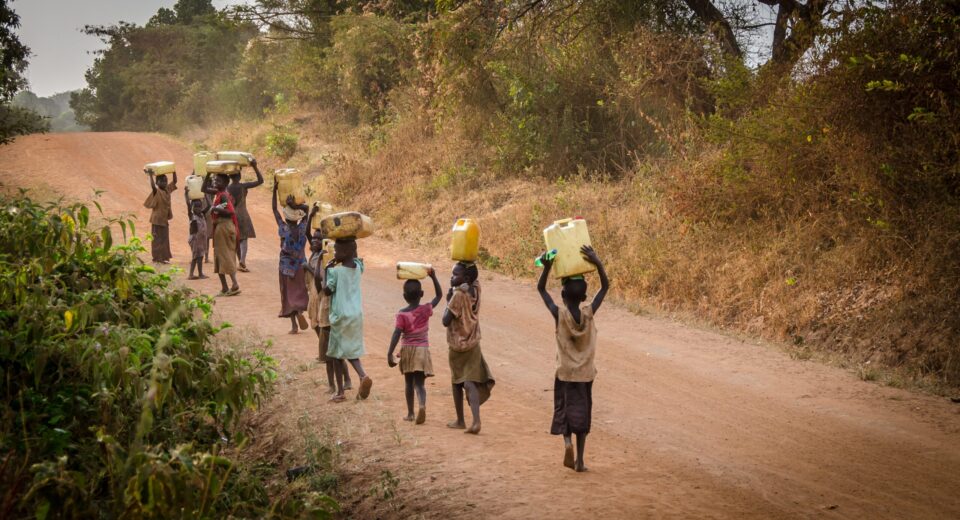
Drowning, Drowning and Drowning in Water Crisis!

  • January 10, 2023
  • 0 Comments

Key Highlights India is facing an acute water crisis with 70% households receiving contaminated water 600 crore faces extreme water stress meaning- 2,00,000 people die every year due to inadequate access to safe water. As per CDP’s analysis, growing water insecurity may put a “substantive corporate value” at risk. There has been a boom in sustainable investment and the ESG term has gained ground to mitigate impact of human activities UDA’s science and technology arm will assist specific industries to devise new sensors and tools to track and improve their water risks accounting. Heading Our Blue Planet with 71% of Earth’s surface covered with water is a necessity for all living creatures. Water is for everyone but will we have enough to use it? Are we taking enough steps to conserve water?  Are we ready to face the consequences of our own activities? These questions loom in my mind. The constant tug of war between water supply and ever- increasing demand is attributed to a confluence of factors such as climatic changes, industrialization, inefficient water usage and urbanization. Consequently, water scarcity, its quality issues and poor water governance are sure to wreck the economy, environment, and people’s lives. It is petrifying to hear that our country is smoldering as per recent surveys suggesting “India is facing an acute water crisis with 70% households receiving contaminated water.”  Further as per the 2018 NITI Aayog report, “600 crore faces extreme water stress meaning- 2,00,000 people die every year due to inadequate access to safe water.” If timely intervention does not happen, an acute water shortage is projected to result in a 6% loss in the country’s gross domestic product.” Horrifying tunnel: Utilities to Risk Journey Water, a finite resource, has its utilities in the various agriculture, industrial and environmental sectors. In India, industries utilize just 13% of available freshwater than agriculture while industries groundwater usage is mere 2%. Though water usage is less in the industrial sector than agriculture, it is pertinent that water has several applications in power generation, textiles, oil gas, metal and mining industries. Henceforth, it is imperative to understand that water shortage shall have a cascading effect on supply chains, production cycle, production costing and companies’ performance increasing their overall financial risks. A dagger that is constantly hanging is that water, an endless resource, is becoming scarce and precious. With rising population and expanding economies, most sectors in the nation will encounter an increase in freshwater demand. The total demand in the country is predicted to double the amount of supply by 2030. This pressure on freshwater demand and availability coupled with habitat degradation, erratic weather cycles are sure to restrain India’s economic growth. “As per CDP’s analysis, growing water insecurity may put a “substantive corporate value” at risk.” To understand this, let us delve into water risks spanning across industries starting with Physical risks stemming from quantity (floods, droughts) and quality (pollution) of water at river basin can substantially impact the environment and company’s performance. Regulatory Risks due to stringent governmental policies and regulations on water withdrawal and discharge, mandatory water recycling and high-water prices. Reputational Risks would emanate from external perceptions about the company’s water use such as negative stakeholder feedback, opposition of projects by the community people, a change in consumer’s behavior, negatively impacting the company’s brand value. Technological Risks: low water intensity inefficient technologies. Recent evidence proposes how water risks have throttled business leading to shut down of 14 of India’s total 20 thermal utilities to shut down at least between 2013 and 2016, costing USD 1.4 billion. Another example of how these risks have started impacting corporations leading to stranded assets across coal, mining and power: The Oyster Nuclear Power plant in the USA has retired after eleven years of working. It can be attributed to a couple of factors: tight effluent discharge regulations (reactor coolants discharged elevated water temperatures and affected aquatic lives), tight water regulation to build cooling towers projected to increase their capital costing. Hence, shutting down of the plant has yielded substantial financial losses. Lately, there has been a boom in sustainable investment and the ESG term has gained ground to mitigate impact of human activities. But what is ESG and why do we care so much about it? ESG (environment, social and governance) are non-financial factors used by investors to assess a company’s business sustainability. With ESG in action, companies minimize footprint and show greater governance. Climate and water risks are amongst several parameters to measure ESG performance of companies. Companies have started disclosing their water risks through ESG (environment, social and governance) reporting but still there is a vacuum in risk disclosure across their core businesses and the impacted interdependent sectors. Current reporting frameworks adopted by companies such as: CDP (Carbon disclosure project), WRI (World Resources Institute) understate the fundamental importance of water. These frameworks focus on quantitative water, energy, carbon indicators with more focus on carbon emissions across the business operations chain without capturing the true sense of water’s footprint across the core business system (example: Information system). Undoubtedly, freshwater is the next frontier of national security and economy. The corporate world should monitor the complete value chain of their operations, services along with sustainably managing water resources to ensure financial, social, and environmental growth. Navigating Water Crisis Oceans and the freshwater ecosystems are a storehouse of services such as climate regulation, groundwater recharge, nursery of species, pool of renewable and non-renewable resources, power as well as economic beneficiaries. It is indispensable to understand that if usual unsustainable approaches to water management and planning are continued without proper mitigation plans, the nation is not far from becoming a hornet’s nest of extreme water crisis. To understand the nuances of water scarcity, it is imperative to understand the maritime domain by not limiting only to the surface but diving deep into underwater, a rich reservoir of resources and biodiversity. In order to ensure high quality of stable water supply, sustainable management of water is a must.