

By Priti Das, World Trade Centers Association (WTC), Pune
- Nation-building is a shared responsibility that cannot happen in isolation. It requires the deep-rooted knowledge of forest officers to manage our catchment areas, the strategic vigilance of our maritime forces, and effective management strategies to bridge these domains.
- Why is the maritime domain so disconnected from our daily consciousness?
- The iconic Greater Flamingos were conspicuously absent or present in very low numbers compared to previous years.
- The depth of this workshop would not have been possible without the stellar lineup of speakers who bridged the gap between theory and practice.
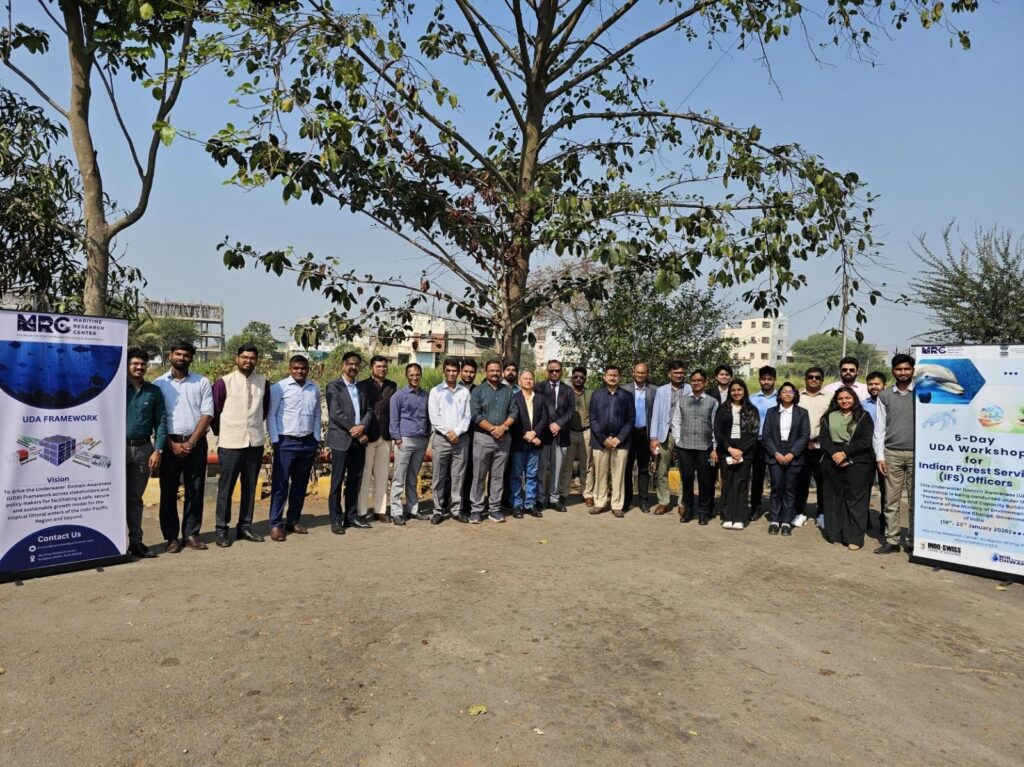
We often speak of the “green cover” as the primary lungs of our planet, meticulously measuring forest density and canopy spread. Yet, we remain largely oblivious to the “blue depths” that sustain them. It is a startling reality that while the ocean covers over 70% of our earth, we have mapped and understood barely 6% of its mysteries. For a student of MBA Marketing with a background rooted in sustainability and an internship at the World Trade Centre (WTC) Pune, my journey into the world of Underwater Domain Awareness (UDA) during the recent 5-day workshop with the Maritime Research Centre (MRC) was not just an academic exercise – it was a paradigm shift.
As someone who looks at the world through the lens of value propositions and strategic communication, I often ask myself: Why is the maritime domain so disconnected from our daily consciousness? The answer lies in visibility. We protect what we see. We manage what we measure. But the underwater world is opaque, hostile, and vast remains a blind spot.
Interacting with the 2003-2020 cadre of 15 Indian Forest Service (IFS) officers, alongside visionary speakers, I realised that the conventional segmentation of land and water administration, where the forest department's jurisdiction typically ends at the shoreline, creates a gap in our defense against climate change. Bridging this gap is not just an administrative necessity but an ecological one.
The Tropical Paradox: Why Western Tech Fails Us
One of the most profound technical revelations of the workshop was the concept of the “Tropical Paradox.” For decades, India’s maritime strategy has relied heavily on sonar models and underwater technologies developed in the Global North, specifically for the temperate waters of the Atlantic or the freezing depths of the Baltic. However, the workshop highlighted a critical, validated data point that demands immediate attention: Western sonar models suffer a massive performance degradation of roughly 60-70% when deployed in our tropical settings.
Qualitative Depth in a Quantitative World
A recurring theme throughout the sessions, particularly emphasized during the discussions on ecological and people distribution, was that “Every quantitative data point needs to be backed by a qualitative study.” In the corporate world, we often get lost in “Big Data,” but at MRC, I learned the value of “Thick Data”, the ethnographic and ecological context behind the numbers.
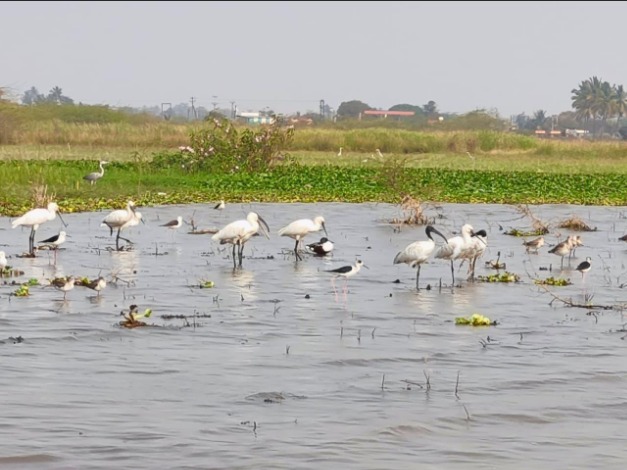
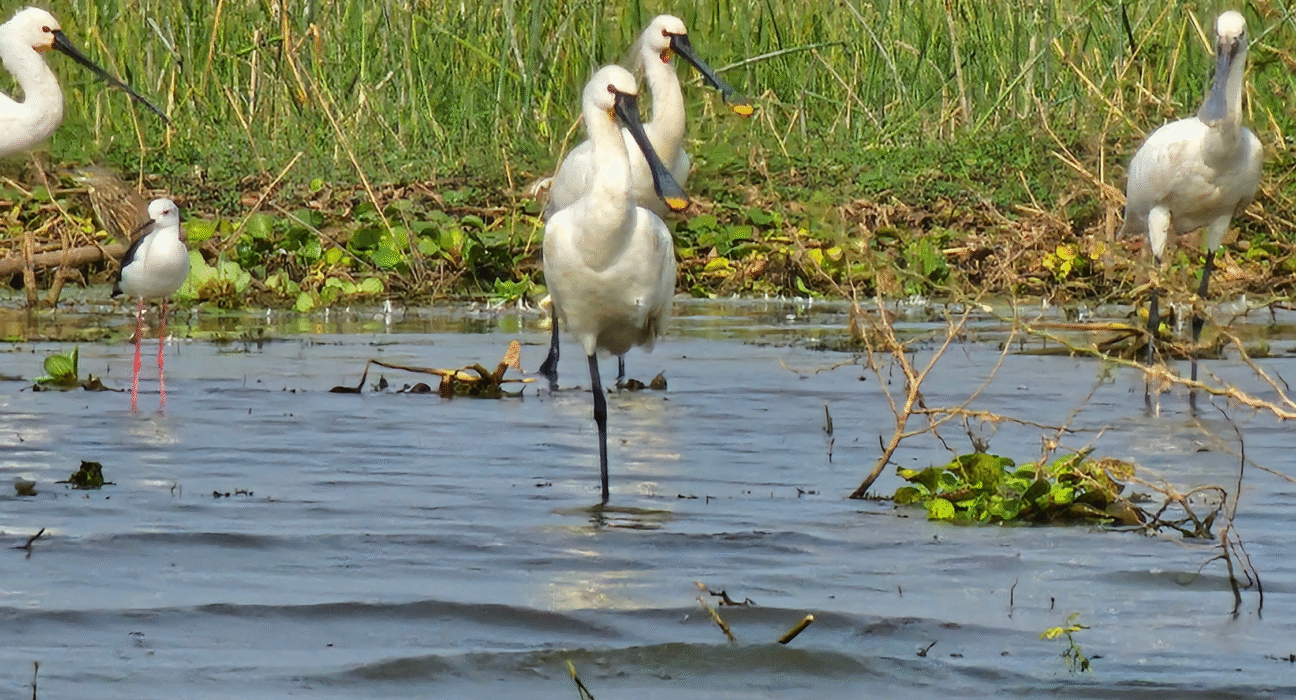
This principle was brought to life during our field visit to the Bhigwan Bird Sanctuary, located in the backwaters of the Ujjani Dam. Quantitatively, a hydrologist might look at the rising water levels of the reservoir and see a “healthy” water stock. However, our qualitative observation told a different story. The iconic Greater Flamingos were conspicuously absent or present in very low numbers compared to previous years
Why? The extended monsoon had kept water levels high, preventing the formation of the shallow mudflats that these birds require for feeding.
While the local conservationists assured us that the flamingos are late but will arrive this February, this delay is a qualitative indicator of a shifting hydrological cycle. A sensor can tell you the water depth, but only a qualitative study of the ecosystem can tell you that the wetland’s functionality is delayed.
The Scalability of Traditional Knowledge
Perhaps the most unique and thought-provoking discussion centered on the Scalability of Traditional Knowledge. We explored case studies that highlighted a disconnect between international standardisation and indigenous reality. A pertinent example often discussed, referred to as the “accreditation trap” in forestry and agriculture, revealed how foreign accrediting bodies often fail to recognise the quality of local produce because their metrics are calibrated for different biomes.
The MRC model suggests a powerful bridge: using the Science & Tech -> Marine Spatial Planning (MSP) pipeline to validate these traditional practices. By integrating acoustic sensors and satellite mapping with the anecdotal wisdom of coastal and forest communities, we can create a "Hybrid Governance" model.
This ensures that traditional knowledge is not just preserved as folklore but scaled as a validated scientific solution, much like the “100 Warriors” initiative which empowers local youth to become custodians of this data.
Strategic Imperatives: SAGAR, Sediment, and Security
The workshop effectively connected the dots between terrestrial management and maritime security, framed within the Prime Minister’s vision of SAGAR (Security and Growth for All in the Region).
One of the most critical “silent killers” discussed was Sedimentation. We learned that major dams are suffering significant capacity losses due to silt accumulation. For instance, the Khadakwasla Dam has reported siltation levels as high as 60% in certain assessments, while larger structures like Bhakra Nangal have seen overall capacity reductions in the range of 23-35%. This is where the forest meets the ocean. Deforestation in the catchment areas leads to soil erosion, which chokes our dams, reducing their lifespan and economic viability.
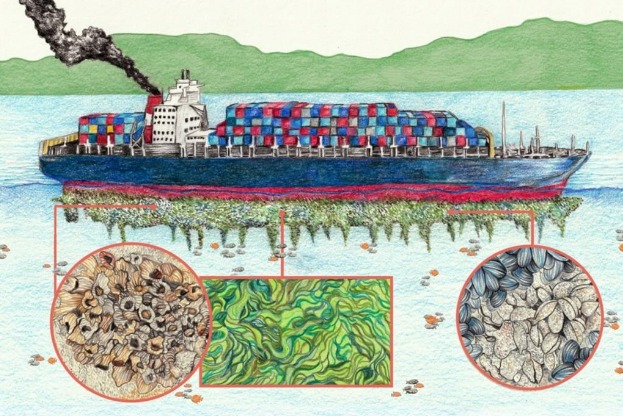
Furthermore, the issue of Biofouling, the accumulation of micro-organisms on wetted surfaces was highlighted as a massive economic drain. It increases the drag on ships, leading to higher fuel consumption and carbon emissions. A validated fact shared was that a biofilm of just 1 mm thickness can cause approximately 15% speed loss for a vessel. Addressing this requires a nuanced understanding of local marine biology, not generic chemical coatings.
The dialogue also navigated the intersection of climate urgency and geopolitical strategy. With the 3-degree tipping point of climate change looming, the demand for sustainable resources has turned Rare Earth Metals into the geopolitical currency of the 21st century. As terrestrial reserves become increasingly contested, the ocean floor is emerging as the next frontier for mining these critical resources. This shift places the Indo-Pacific at the heart of a new power play. In this context, a robust UDA framework becomes the bedrock of national strategy, enabling India to proactively map and secure its underwater wealth. By prioritizing deep-sea awareness, we can transform potential vulnerabilities into strategic assets, ensuring that our maritime capabilities match our geopolitical aspirations.
The Human Element: Architects of Awareness
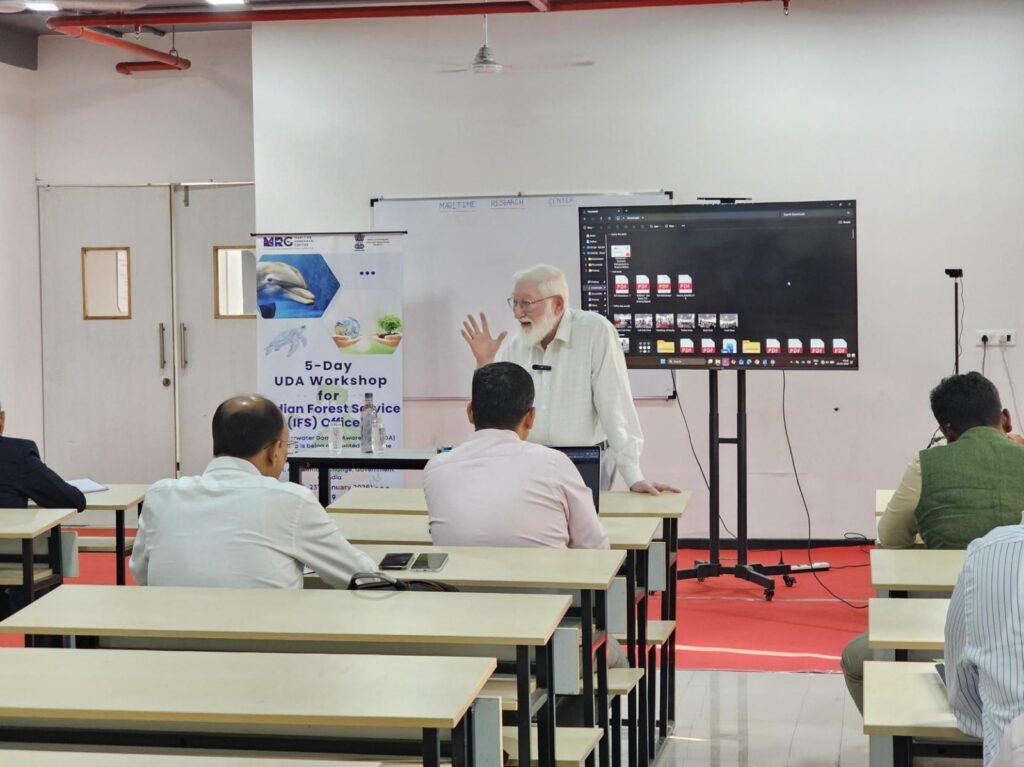
The depth of this workshop would not have been possible without the stellar lineup of speakers who bridged the gap between theory and practice. Dr. Arnab Das provided the foundational UDA Framework, dismantling the complexity of the underwater domain into actionable strategies. Ambassador Anup Mudgal opened our eyes to the geopolitical chessboard of the Indo-Pacific, explaining how climate change is a threat multiplier. Dr. Erach Bharucha and Dr. Kranti Yardi brought the critical ecological perspective, reminding us that the health of the ocean is directly linked to human health.
I must also make special mention of Dr. Ajay Dandekar, whose session on "Stakeholder Engagement & Conflict Resolution" was a masterclass in soft power. In the management of natural resources, conflict is inevitable, whether between nations sharing a river or between a dam authority and local fishermen. Dr. Dandekar provided the tools to navigate these human complexities, emphasizing that sustainable governance is impossible without community buy-in.
Finally, a tribute is due to the MRC team, Mrs. J. Cathrine, Mr. Romit Khaware, Ms. Tejaswini, Ms. Nishtha, and Mr. Shridhar Prabhuraman. They were the translators of this complex science. From Ms. Tejaswini’s detailed breakdown of the Brahmaputra River system to Mr. Khaware’s insights into sediment transport, Ms. Nishtha’s coordination of the “100 Warriors” and Mrs. Cathrine’s seamless linkage of forestry to the Blue Economy, they showcased the rigorous academic backbone of the MRC.
Conclusion
Important remark: Images used in this article are on-ground images that were clicked during the 5-day workshop, which was held at the UDA Center in Pune, Maharashtra, from 19-23 January 2026.
Priti Das
About Author