


By: Mahak, St. Stephen’s College, DU
- Advancements in UDA technologies are lifting the veil on the ocean’s depths and offering new insights into a previously opaque realm.
- UDA is not just for defense, but a game changer for combating illicit activities like IUU fishing, disrupting smuggling routes and protecting vital undersea infrastructure.
- AI and autonomous systems transform raw underwater data into actionable intelligence to ensure better policies, smarter regulations and good ocean governance for nations like India.
- Robust UDA capabilities are crucial for India’s strategic autonomy, its Blue Economy ambitions, and its leadership in ensuring stability and environmental awareness in the Indo-Pacific region.
The world’s oceans, covering over 70% of the Earth’s surface, are vast, dynamic, and incredibly opaque. For centuries, our ability to truly understand and govern their depths has been limited to just surface observations and fragmented data. But that is rapidly changing. We are now in an era where Underwater Domain Awareness (UDA) is transforming how we see and manage the seas beneath us.
UDA is not just about submarines and naval strategy, but it is a foundational pillar for effective ocean governance. It gives us an unprecedented look into the subsurface by driving a digital revolution in how we monitor, regulate, and sustainably manage our marine water and even interconnected freshwater systems. Think of it as the ‘Eye below’ that helps nations, especially those with extensive coastlines like India in shifting from just reacting to problems to proactively looking after their precious aquatic territories. This article will explore how UDA’s technological leaps are enhancing our ability to monitor and enforce regulations by paving the way for a new era of robust ocean governance.
The Opaque Challenge: The Need for UDA for Better Governance
For instance, consider Illegal, Unreported, and Unregulated (IUU) fishing. It is a global menace and besides depleting fish stocks and harming honest fishers, it is often linked to organized crime. Traditional methods like sending out patrol boats are like searching for a needle in a haystack. Similarly, narcotics smuggling increasingly exploits the subsurface, using ingenious methods to hide contraband. Moreover, below the waves, vital undersea infrastructure like internet cables and energy pipelines is vulnerable to accidental damage or even sabotage, compromising global communication and energy flows.
UDA's Tech Revolution: Powering a Digital Shift
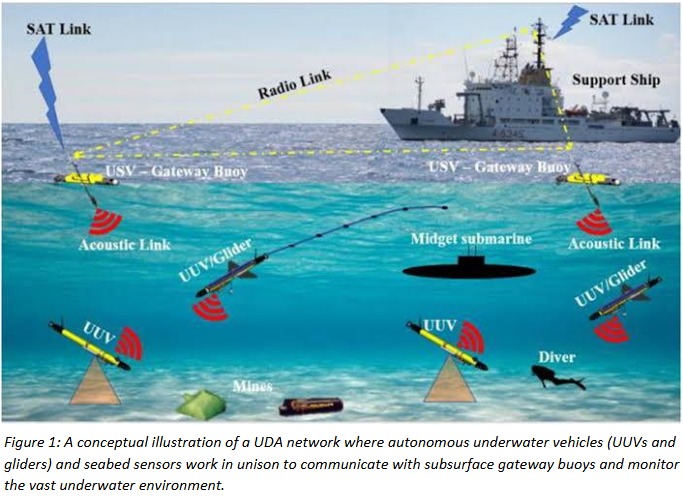
1: Autonomous Underwater Vehicles (AUVs) and Unmanned Underwater Vehicles (UUVs)- Robotic platforms that are the workhorses of modern UDA. They can operate independently for long periods, carrying sensors like sonar, cameras, and environmental probes. They map the seafloor, detect underwater objects, monitor marine life, and even identify sounds from vessels. Their ability to cover vast areas without human risk and at lower costs than manned vessels makes them indispensable.
India is heavily investing in these capabilities. The Autonomous Systems Industry Alliance (ASIA), which was formed recently with US partners, focuses on co-developing and co-producing advanced autonomous systems, including potential UUVs, highlighting a strategic push towards self-reliance and technological leadership.
2: Advanced Sonar and Hydrophone Networks- Modern sonar systems and listening networks (Hydrophones) offer vastly improved detection and classification. Passive acoustic monitoring (listening to sounds) provides continuous and stealthy surveillance, while active sonar, though more detectable, gives precise imaging. Integrating these networks with fiber optic cables allows for real-time data transmission to the shore.
3: Artificial Intelligence (AI) and Machine Learning (ML)- The sheer volume of data from UDA sensors is too much for humans alone so AI and ML algorithms are necessary for the following tasks-
Automated Target Recognition- Instantly identifying and classifying objects or sounds such as differentiating a fishing trawler from a submarine or even marine mammals.
Anomaly Detection- Spotting unusual patterns or behaviors that might indicate illegal activities.
Data Fusion- Combining data from different sources (Sound, visuals, environmental and satellite) to create a comprehensive picture.
Predictive Analytics- Forecasting potential movements or environmental changes based on historical and real time data.
AI and ML are true game changers, turning vast oceans of data into precise and actionable intelligence.
4: High Bandwidth Underwater Communications- Getting real-time data from underwater platforms to decision makers ashore needs robust communication links. Advances in acoustic and optical communication are making this possible.
5: Satellite Integration and Data Dissemination- While UDA focuses on the subsurface, combining its insights with satellite-based MDA platforms creates a truly multi-layered understanding. Processed UDA insights can be pushed to secure networks, giving various stakeholders a holistic view of the conditions.
Initiatives like the Indo Pacific Maritime Domain Awareness (IPMDA), a Quad program, aim to fuse data from various sources to provide partner nations with a clearer picture of regional maritime activities, which would significantly benefit from integrated UDA inputs.
UDA in Action- Monitoring Illicit Activities
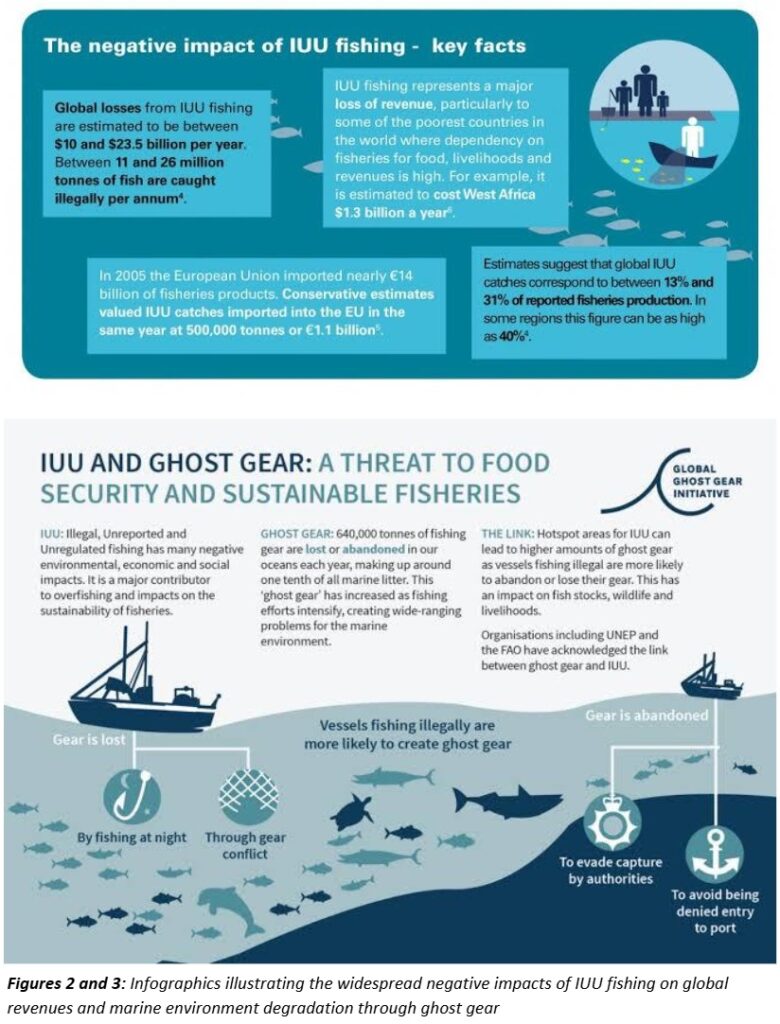
Combatting IUU Fishing-UDA provides a much-needed advantage as AUVs with acoustic sensors can patrol protected zones, detecting the unique sounds of illegal fishing gear or trawlers. AI analyzes these patterns to flag suspicious activity, thereby prompting the deployment of patrol vessels. This allows for far more targeted and efficient enforcement, protecting marine resources as well as the livelihoods of legitimate fishers.
India's National Fisheries Policy (2020) and its emphasis on sustainable practices directly benefit from improved UDA to curb IUU fishing, which undermines these efforts.
Detecting Smuggling and Narcotics Trafficking- Criminals are increasingly using submerged methods to transfer illegal substances. UDA’s advanced sonars can quickly scan ship hulls for hidden compartments or attached objects. Undersea sensor networks can monitor choke points for unusual underwater movements, with AI flagging any deviations, allowing this ‘Below the surface’ awareness to provide a critical security layer.
Monitoring Undersea Infrastructure- The seabed hosts vital internet cables and energy pipelines. Any unauthorized activity or sabotage here can cause widespread global disruption.
UDA’s Role- AUVs can regularly inspect cable routes for tampering while acoustic sensors can even detect unauthorized submersibles or diver activity.
This proactive monitoring is vital for safeguarding the digital and energy lifelines that power our modern world.
Environmental Crime Monitoring- Illegal dumping or pollutant discharge often goes unseen beneath the waves. UDA systems, equipped with environmental sensors, can map pollution plumes, detect chemical discharges, or monitor seabed changes from illegal mining. This enables the authorities to identify sources of environmental damage and enforce regulations more effectively.
From Data to Decisions: UDA's Role in Regulatory Enforcement-
The true power of UDA lies in its ability to transform collected data into actionable intelligence for regulatory enforcement. This requires not just seamless data integration and sophisticated analysis but also efficient dissemination.
Digital transformation is not merely about technology adoption, but also about fundamentally reshaping the processes, culture, and capabilities of organizations to leverage digital advancements for enhanced efficiency, transparency, and decision-making. This principle applies directly to ocean governance.
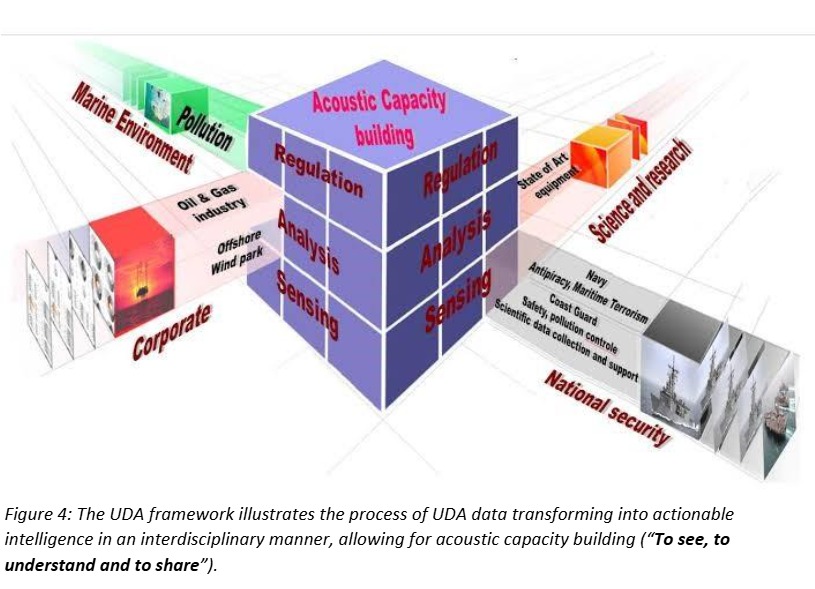
Integrated Data Platforms- UDA insights (Acoustic, visual and environmental) must be integrated with broader MDA platforms to ensure the cross-referencing of subsurface activity with surface vessel tracking, satellite imagery, and intelligence reports. India’s Information Fusion Centre- Indian Ocean Region (IFC IOR) is a prime example of an initiative crucial for this integration. Its role is to fuse maritime information from various sources, making it a powerful hub for comprehensive domain awareness.
The IFC IOR is a shining example of how integrated data, bolstered by UDA insights, forms the bedrock of real-time maritime security.
Automated Alert Systems- AI-driven UDA systems can trigger automated alerts when suspicious patterns are detected, and these alerts can further be delivered in real time to agencies like the Indian Coast Guard, Indian Navy, or environmental protection bodies to enable rapid response and action.
Evidence Collection- UDA systems can collect high-fidelity data like acoustic recordings or underwater imagery. This serves as crucial evidence for prosecuting offenders, thereby strengthening the legal framework for maritime governance.
Policy Formulation and Adaptive Management- Long-term UDA data collection builds a comprehensive understanding of human activity and environmental changes below the surface. This rich dataset is invaluable for informing evidence-based policy, reviewing existing regulations, and adopting adaptive management strategies for marine resources. For instance, UDA data could inform decisions on marine protected area boundaries, fishing quotas, or shipping lane adjustments. This direct link to informed policy is a core aspect of good governance.
UDA as a Digital Public Good- Beyond Security
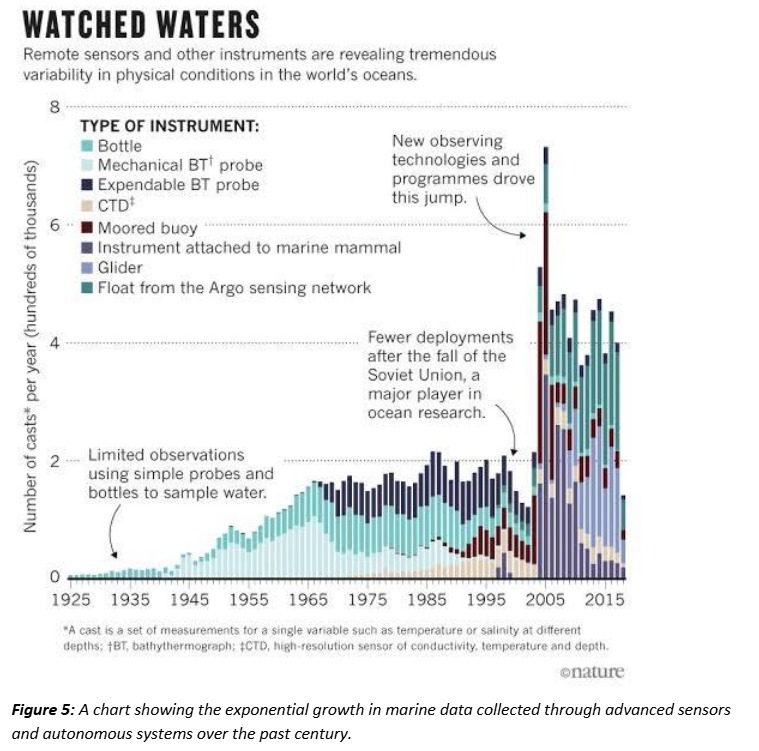
Environmental Monitoring-Tracking Ocean health, pollution dispersal, biodiversity changes, and the impacts of climate change on marine ecosystems. This data is critical for achieving Sustainable Development Goal 14 (Life Below Water).
Disaster Preparedness- Understanding estuarine and coastal marine systems via UDA can contribute to urban flood preparedness by monitoring storm surges and unusual water movements thereby enabling better alerts and planning for coastal communities, especially during the monsoon season.
Scientific Research- Providing researchers with unprecedented access to data about oceanographic conditions, marine life behavior and geological features to accelerate scientific discovery.
Blue Economy Development- Informing sustainable practices for aquaculture, marine tourism, and even renewable energy by providing detailed environmental and spatial information. For instance, UDA data can help in Marine Spatial Planning (MSP), ensuring different oceans coexist harmoniously and sustainably.
India's Journey: Challenges and Strategic Imperatives
Technological Self-Reliance- Developing indigenous UDA technologies under the ‘Make in India’ and ‘Atmanirbhar Bharat’ initiatives is paramount. While international collaborations are valuable, true self-reliance in sensor development, AI algorithms, and autonomous platform manufacturing will reduce dependency and boost national security.
Data Integration and Interoperability- Integrating inputs from diverse UDA sensors with existing surface MDA systems and data from various stakeholder agencies remains a complex task because solutions must be scalable and secure. This is where a national UDA framework can create a comprehensive ecosystem for data flow.
Skilled Manpower- Operating, maintaining and analyzing the torrent of data from advanced UDA systems requires highly specialized skills. Investing in training and education for marine engineers, data scientists, and maritime security professionals is essential. India’s Deep Ocean Mission is not just about technology but also about building the human expertise to explore and manage our deep-sea resources.
Legal and Regulatory Frameworks- As UDA technologies evolve, so too must the legal frameworks governing their use, data privacy, and the prosecution of underwater crimes. India is actively reviewing its maritime laws to adapt to these new realities.
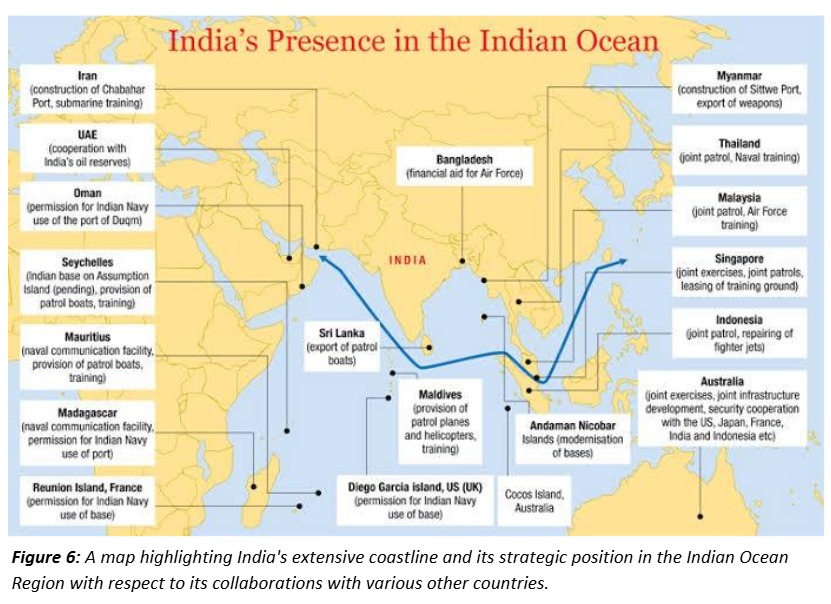
International Cooperation- Given the transboundary nature of oceans, India’s leadership in forums like the Indian Ocean Rim Association (IORA) and the Quad is crucial. Promoting regional UDA cooperation, standard protocols and information sharing agreements helps to combat shared threats and contributes to a stable and secure Indo Pacific.
A robust UDA framework serves as a cornerstone for India's strategic autonomy and its ability to lead regional initiatives for collective maritime security.
Conclusion
As India continues its ascent as a major maritime power and champion of the Blue Economy, robust UDA capabilities will not only secure its own national interests but also serve as a foundational pillar for regional stability and sustainable ocean governance in the entire Indo-Pacific.
References

Mahak
About Author