


By Mehak (St Stephen’s College)
- This article identifies IUU fishing as a three-pronged problem with devastating environmental, economic, and social impacts, besides undermining global fisheries.
- The growth of sustainable aquaculture provides a reliable seafood supply, thereby reducing pressure on wild fish stocks and diminishing the incentive for IUU fishing.
- Modern technologies, such as GIS and AI for Marine Spatial Planning (MSP) and the Potential Fishing Zones (PFZ) advisory, detect, deter, and prosecute IUU fishing by enhancing traceability.
- The MRC’s UDA Framework utilises security, economic, environmental, and scientific insights that are crucial for combating IUU activities through tools such as Area, Production and Yield (APY) analysis and Environmental Impact Assessment (EIA).
The global maritime domain, a vast expanse of interconnected oceans and coastlines, is a crucial aspect of our planet’s blue economy. It provides food, livelihoods, and economic stability for millions. However, this vital resource is under constant threat from a pervasive and destructive force: Illegal, Unreported, and Unregulated (IUU) fishing. This clandestine activity is a severe form of maritime crime that depletes fish stocks, harms marine ecosystems and destroys the livelihoods of legitimate fishers. In the 21st century, with major powers increasingly focused on the Indo-Pacific region, the need for a comprehensive and collaborative approach to maritime governance is more urgent than ever.
This article delves into the multifaceted nature of IUU fishing, explores its devastating impacts and highlight how a holistic approach integrating sustainable aquaculture, advanced maritime awareness, digital transformation and inclusive policy frameworks championed by institutions like the Maritime Research Center (MRC) offers a powerful solution to this global challenge.
Understanding the Issue- The Profound Impact of IUU Fishing-
IUU fishing is a complex, three-pronged problem that systematically undermines the very foundations of responsible fisheries management and ocean health. It is defined by the Food and Agriculture Organisation (FAO) as-
Illegal fishing- Activities conducted in violation of national or international laws, such as fishing without a license or in prohibited areas.
Unreported fishing- The deliberate failure to report or the misreporting of catch data to relevant authorities, which cripples scientific stock assessments.
Unregulated fishing- Activities in areas or for stocks where no conservation measures exist are often conducted by vessels exploiting loopholes in governance.
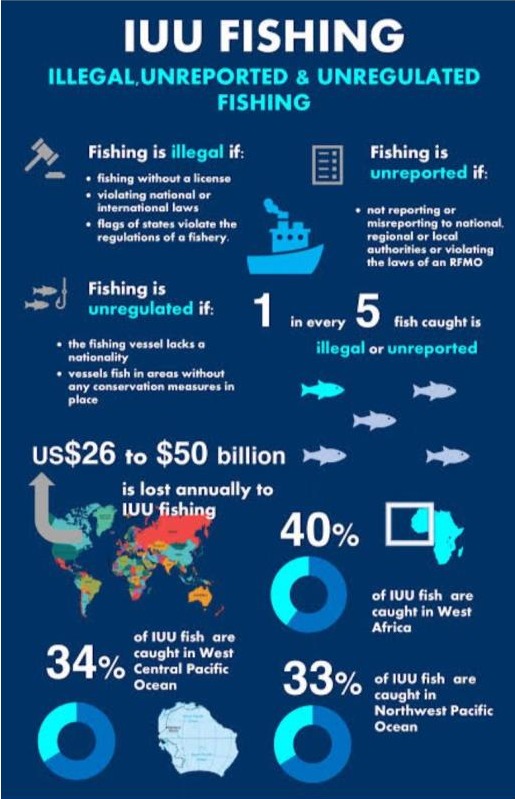
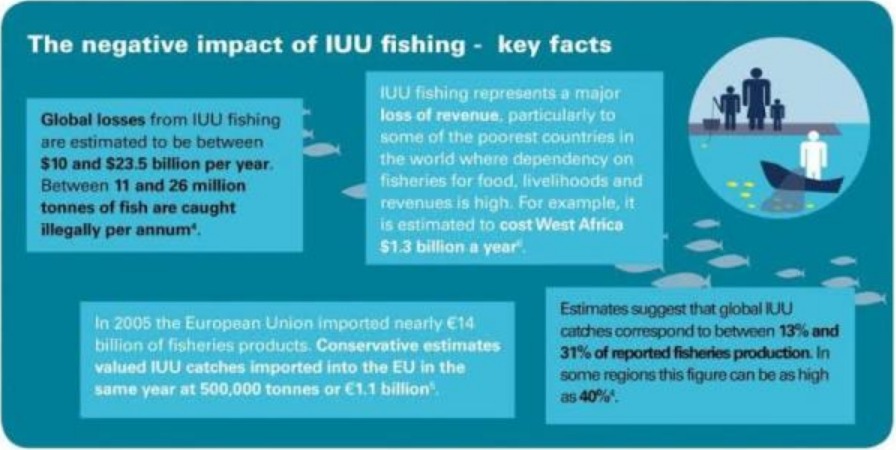
Infographics explaining IUU fishing, with its prevalence and economic impacts all over the world
The impacts of IUU fishing are far-reaching. Environmentally, it is a primary driver of global overfishing, with estimates suggesting it accounts for a significant portion of the world’s total catch. This unsustainable removal of marine life pushes fish stocks to critical levels, thereby threatening biodiversity and ecosystem resilience. Economically, it robs legitimate fishing industries of billions of dollars annually, creating unfair competition for law-abiding fishers who comply with regulations. Socially, the consequences are equally dire as they disproportionately affect small-scale fishing communities, who often depend entirely on local fish stocks for their livelihoods and food security. IUU fishing is also frequently linked to severe human rights abuses, including forced labour. The global supply chain, often weakly regulated, allows illegally caught fish to easily penetrate markets, making it difficult for consumers to distinguish between legal and illicit products. In response to this global scourge, international frameworks like the FAO’s International Plan of Action (IPOA IUU) and national regulations like the European Union’s catch certification schemes and the United States’ Seafood Import Monitoring Program (SIMP) have been established, but the scale of the problem requires a more comprehensive approach.
A New Era of Sustainable Aquaculture- Easing Pressure on Wild Fisheries-
One of the most effective long-term strategies for combating IUU fishing is to reduce pressure on wild fish populations by strategically and sustainably developing aquaculture. As global demand for seafood continues to rise, aquaculture, the farming of aquatic organisms, has emerged as a vital industry, providing a reliable source of protein and alleviating immense pressure on wild fish stocks. In fact, 2022 marked a historic milestone as global aquaculture production of aquatic animals surpassed that of capture fisheries for the first time. The Indo-Pacific region is a global leader in both fisheries and aquaculture and plays a crucial role in this transition.
Aquaculture, being a controlled cultivation method, provides much more flexibility for integrating new-age technologies in the fisheries industry, including remote monitoring, increased seaweed cultivation, Integrated Multi-Trophic Aquaculture (IMTA), and Recirculating Aquaculture Systems (RAS). In small-scale aquaculture operations, the following two innovative and sustainable practices are being widely adopted and promoted-
Integrated Multi-Trophic Aquaculture (IMTA) is an ecologically engineered system that co-cultures species from different trophic levels within the same system. For instance, the waste from fed species like fish becomes nutrients for extractive species such as seaweeds or filter-feeding molluscs. This symbiotic relationship minimises waste, reduces environmental impact and enhances overall system efficiency, mimicking natural ecosystems.
Seaweed farming- This rapidly growing sector is gaining recognition for its potential in addressing food security, environmental sustainability and economic development. Seaweed, being rich in essential nutrients, requires minimal land or freshwater and acts as an efficient carbon sink.
India is making a significant push to increase seaweed farming, aiming to reach 1 million tonnes per year by the end of 2025. Seaweed farming also empowers coastal communities, particularly women, by providing stable livelihoods and economic resilience.
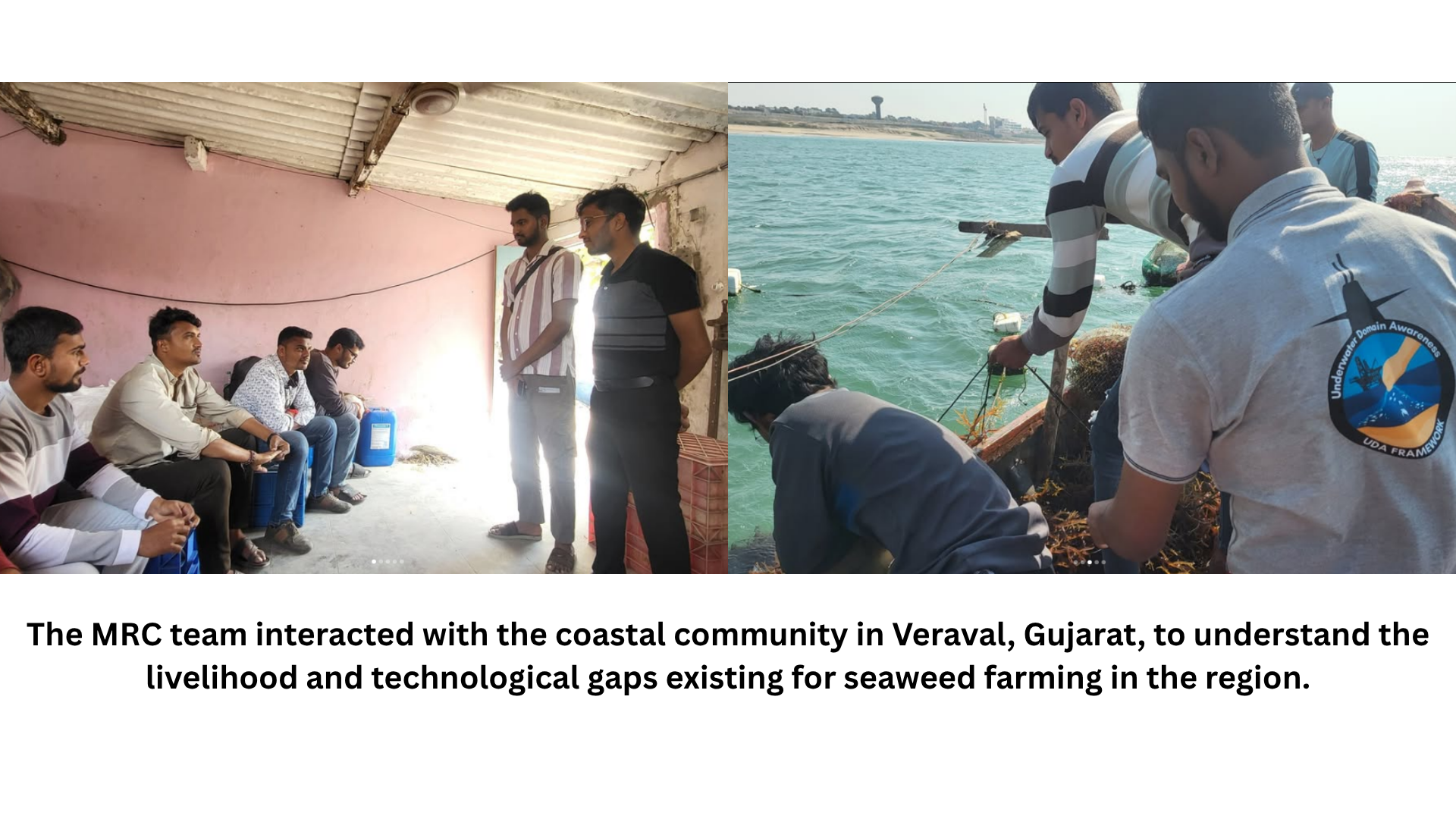
By enabling sustainable and efficient aquaculture practices, we can provide a reliable source of protein for a growing global population while easing the burden on wild fish stocks, thereby directly reducing the economic incentive for IUU fishing.
Digital Transformation and Marine Spatial Planning (MSP):
The fight against IUU fishing is being revolutionised by digital transformation, which enhances transparency, traceability and enforcement capabilities. This technological revolution is deeply intertwined with the principles of UDA and Marine Spatial Planning (MSP)
Marine Spatial Planning (MSP) is a structured, science-based decision-making framework for managing ocean spaces. It provides a multi-sectoral approach to the strategic allocation of marine areas for various uses, such as aquaculture, fisheries, and conservation, while minimising conflicts and environmental impacts. MSP frameworks, as adopted by the EU, China and various regions in the US and Australia, are increasingly leveraging digital tools-
Geographic Information Systems (GIS): GIS is fundamental to MSP, allowing planners to overlay multiple data layers to identify optimal marine zones and track changes.
Remote sensing and satellite monitoring: High-resolution satellite imagery and remote sensing are widely used to track illegal fishing activities and pollution levels in real time, providing crucial data for enforcement.
AI and machine learning: AI models can predict climate impacts on marine ecosystems, automate marine species identification and enable dynamic ocean zoning by adjusting marine use areas based on real-time conditions.
Blockchain and digital twins: Blockchain technology provides secure, tamper-proof record-keeping to track marine resource use. Digital twins of the ocean are virtual models that simulate marine environments, allowing policymakers to test different scenarios before implementation.
These digital advancements optimise marine resource management and enhance tracking of marine biodiversity. Open-access marine data portals allow for greater transparency and stakeholder participation, making ocean governance more collaborative.
Digital tools in fisheries
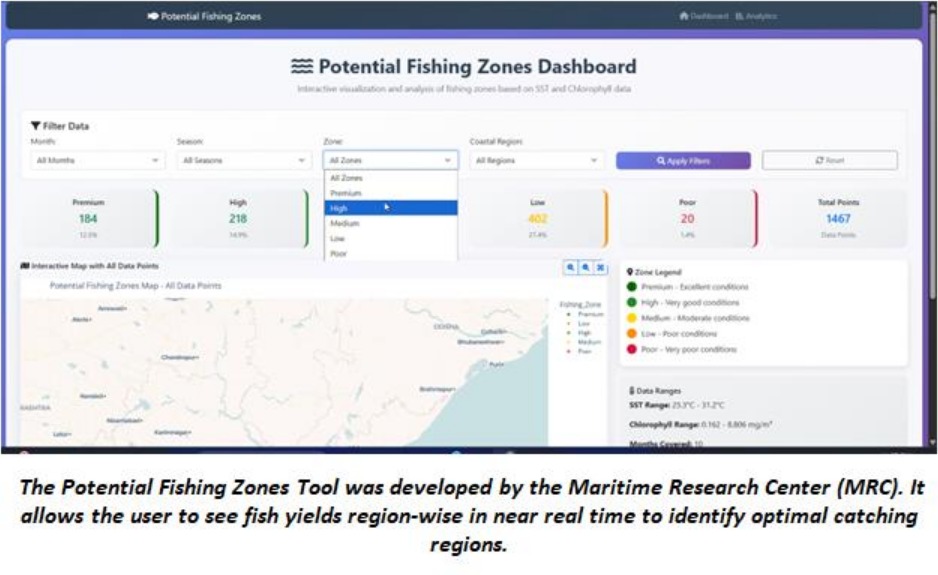
Beyond MSP, digital transformation directly supports sustainable fishing practices. India’s Potential Fishing Zone (PFZ) service, developed by the Maritime Research Center (MRC), is a prime example. This service uses satellite data to identify areas where fish are likely to aggregate. These advisories are delivered via phone and mobile apps to empower small-scale fishers with real-time information that guides them to productive fishing grounds and drastically reduces search time, fuel consumption, and effort. This not only enhances economic outcomes for legitimate fishers but also promotes sustainable practices by reducing unnecessary bycatch and minimising the overexploitation of non-PFZ areas.
The Maritime Research Center (MRC) and the Evolution of Underwater Domain Awareness (UDA)
The successful transition to a more sustainable and secure maritime future hinges on a comprehensive understanding and management of the underwater realm. This is where the work of institutions like the Maritime Research Center (MRC) becomes indispensable.
The MRC is a leading think tank that has pioneered the Underwater Domain Awareness (UDA) framework, a strategic paradigm that fundamentally redefines maritime governance.
Traditionally, maritime security and management have been dominated by Maritime Domain Awareness (MDA), which largely focuses on surface activities. However, the MRC recognised that this surface-centric approach leaves significant gaps in our understanding of the vast and complex underwater environment. UDA transcends MDA by integrating insights from various critical stakeholders, such as maritime security, the blue economy, the marine environment, disaster management, and science and technology providers. This holistic framework is designed to provide a comprehensive picture of what is happening both on and beneath the water’s surface, which is crucial for effective governance.
The MRC’s commitment to UDA is driven by the unique challenges of the tropical littoral waters of the Indo-Pacific, such as sub-optimal sonar performance. The UDA framework addresses these by promoting customised technologies and policy interventions. MRC’s contributions to combating IUU fishing and promoting sustainable maritime practices are multifaceted-
APY analysis tool: MRC has developed a groundbreaking framework for Area, Production and Yield (APY) analysis. This data-driven modelling and simulation technique is designed to optimise the growth of aquatic organisms, particularly shrimp and seaweeds. By monitoring critical environmental parameters, the APY tool provides real-time insights and predictive modelling. This allows farmers to identify optimal cultivation conditions and maximise their yields, which directly enhances aquaculture productivity and reduces stress on wild capture fisheries, thereby lessening the incentive for IUU fishing.
MRC has published the underlying methodology to research communities and made the algorithms and equations open source to strengthen collaborative efforts. One can read the following IJMS journal paper for complete information about the work- https://doi.org/10.56042/ijms.v53i05.21662
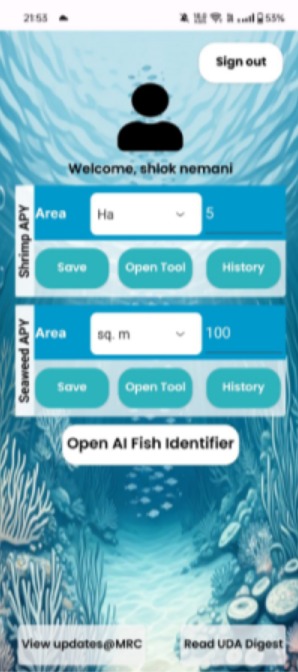
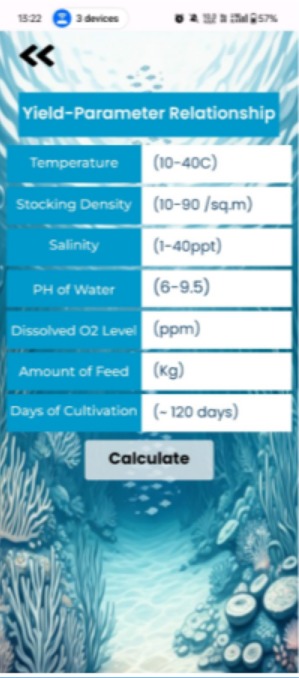
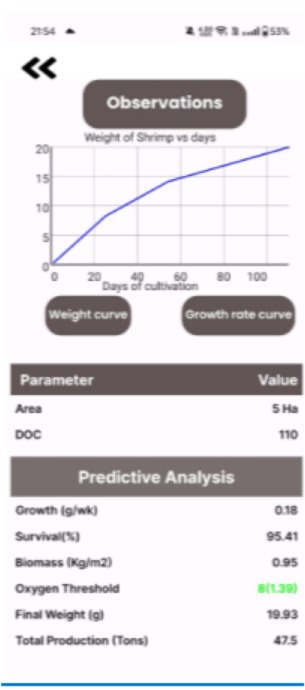
APY tool developed by the Maritime Research Center (MRC). The tool supports shrimp and seaweed organisms separately. In the yield-parameter relationship form, farmers can enter farm operation values to obtain predictions of expected productivity and biomass.
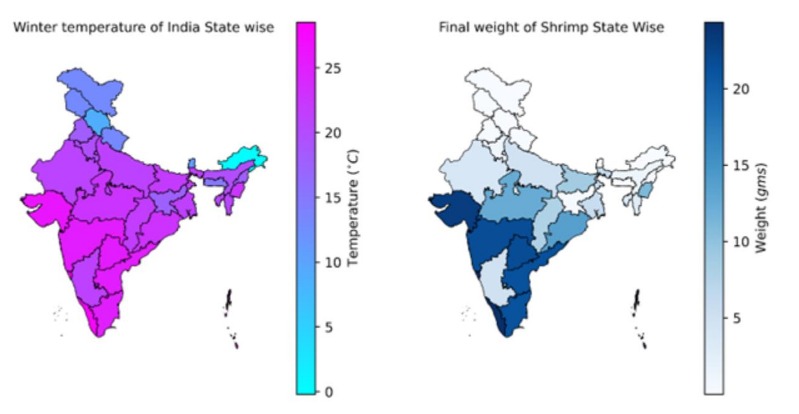
APY analysis strengthens broader policy making for shrimp aquaculture by integrating data driven analysis in it. Based on the state wise average monthly temperatures, the algorithm can determine the expected productivity thereby providing insights about how much area allocation is necessary, expected production and other important parameters.
Environmental Impact Assessment (EIA)- Recognizing the potential negative impacts of intensive aquaculture, the MRC emphasizes the critical role of Environmental Impact Assessment (EIA). Their research highlights the necessity of conducting EIAs for blue economy related activities in Indian waters. This ensures that expansion in sectors like shrimp farming is undertaken with a clear understanding of potential ecological consequences, promoting sustainable development and preventing environmental degradation.
Modelling and simulations- Beyond APY, the MRC extensively utilizes modeling and simulations across aquaculture, UDA and Marine Spatial Planning (MSP). These tools are vital for understanding complex aquatic systems, predicting the impact of various environmental conditions on marine life and testing different policy scenarios. This scientific rigor allows informed decision making for sustainable resource management and helps anticipate challenges that might otherwise drive illegal activities.
The MRC’s comprehensive approach, moving from foundational research and policy formulation to the development of practical tools and capacity building, is instrumental in creating a maritime intent within a traditionally continental mindset
Bridging the Gap- Small-Scale vs. Large-Scale Fisheries and Traditional Knowledge
The global fisheries sector is characterised by a stark disparity between Small-Scale Fisheries (SSF) and Large-Scale Enterprises (LSE). While LSEs often employ advanced technology and substantial capital, SSFs are typically family-based and rely on traditional, low-impact methods. Despite accounting for a substantial portion of global fish catch, SSFs often face marginalisation. This disparity can inadvertently contribute to IUU fishing as struggling small-scale fishers might be pushed into illicit activities to survive.
However, SSFs are inherently more sustainable due to their reliance on selective fishing gear and their smaller carbon footprint. They also use almost all of their catch for direct human consumption, unlike a quarter of industrial catches. The integration of traditional knowledge and practices with modern approaches is crucial for sustainable fisheries management. Historically, fishing was a way of life that was deeply connected to nature’s rhythms, with practices passed down through generations. Traditional fishing techniques in Lake Kolleru and traditional aquaculture practices in the Pokkali culture in India demonstrate resourcefulness and ecological understanding.
To bridge the gap between SSF and LSE and ensure a sustainable future, policy interventions are vital-
Empowerment and support: Policies such as India’s Pradhan Mantri Matsya Sampada Yojana (PMMSY) and the Kisan Credit Card (KCC) scheme aim to strengthen the fisheries sector, including SSF, by providing financial aid and expert advice. The ‘Cluster approach’ for small-scale shrimp farmers is a proven method of boosting yields and sustainability.
Digital inclusion: Initiatives such as the APY analysis tool and the PFZ service demonstrate the power of digital transformation to empower Small-Scale Fisheries (SSF) with real-time data and market insights.
Marine spatial planning for equity: MSP frameworks can play a crucial role in ensuring equitable access to marine resources for both small-scale and large-scale operators, thereby reducing conflicts over space and protecting traditional fishing grounds.
Conclusion
IUU fishing remains a formidable threat to the health of our oceans, global food security and the livelihoods of millions. Its pervasive nature demands a comprehensive and collaborative response that transcends traditional sectoral boundaries. The journey towards a truly sustainable blue economy requires a paradigm shift from fragmented management to a holistic understanding and governance of the entire aquatic domain.
The ongoing digital transformation of the maritime sector, including advancements in Marine Spatial Planning (MSP) with GIS, AI, and Digital Twins, alongside practical tools such as India’s Potential Fishing Zone (PFZ) advisories, empowers stakeholders with real-time information and predictive capabilities. This technological leap not only improves the efficiency and profitability of legitimate fishing and aquaculture but also significantly enhances the ability to detect, deter and prosecute IUU activities.
The work of MRC, with its pioneering UDA Framework, provides a clear and actionable roadmap. By integrating maritime security, blue economy development, marine environmental protection and scientific innovation, UDA offers a powerful lens through which to monitor, understand and manage our oceans. The MRC's specific contributions from the data-driven APY analysis for optimising aquaculture yields to promoting rigorous Environmental Impact Assessments (EIA) and utilising advanced modelling and simulation techniques directly contribute to curbing IUU fishing by allowing for sustainable practices and enhancing transparency.
Crucially, the success of these efforts hinges on inclusive governance that recognises and supports the vital role of small-scale fisheries and integrates traditional knowledge with modern science. By bridging the disparities between small-scale and large-scale operations, providing access to technology and training, and ensuring equitable policy frameworks, we can empower vulnerable communities and enable collective stewardship of our marine resources.
The Indo-Pacific region, with its immense potential and unique challenges, stands as a critical area for demonstrating the effectiveness of this integrated approach. By continuing to invest in research, create international collaborations and build a highly skilled workforce, nations can collectively transform the fight against IUU fishing. The future of our oceans depends on our ability to see, understand and share our collective responsibility for this vital domain, thereby ensuring a prosperous and truly sustainable blue future for generations to come.
References
Mahak
About Author
Mahak interned at the Maritime Research Center in 2025. She has a keen interest in the intersections of environmental sustainability, technology and governance in the maritime domain. Drawing on her background in English studies, she translated specialised concepts into accessible, engaging insights for a broad audience, thereby bringing a fresh perspective.